Reefer Van Reliability: Why Dubai's Food Safety Mandates Require Chiller Telemetry
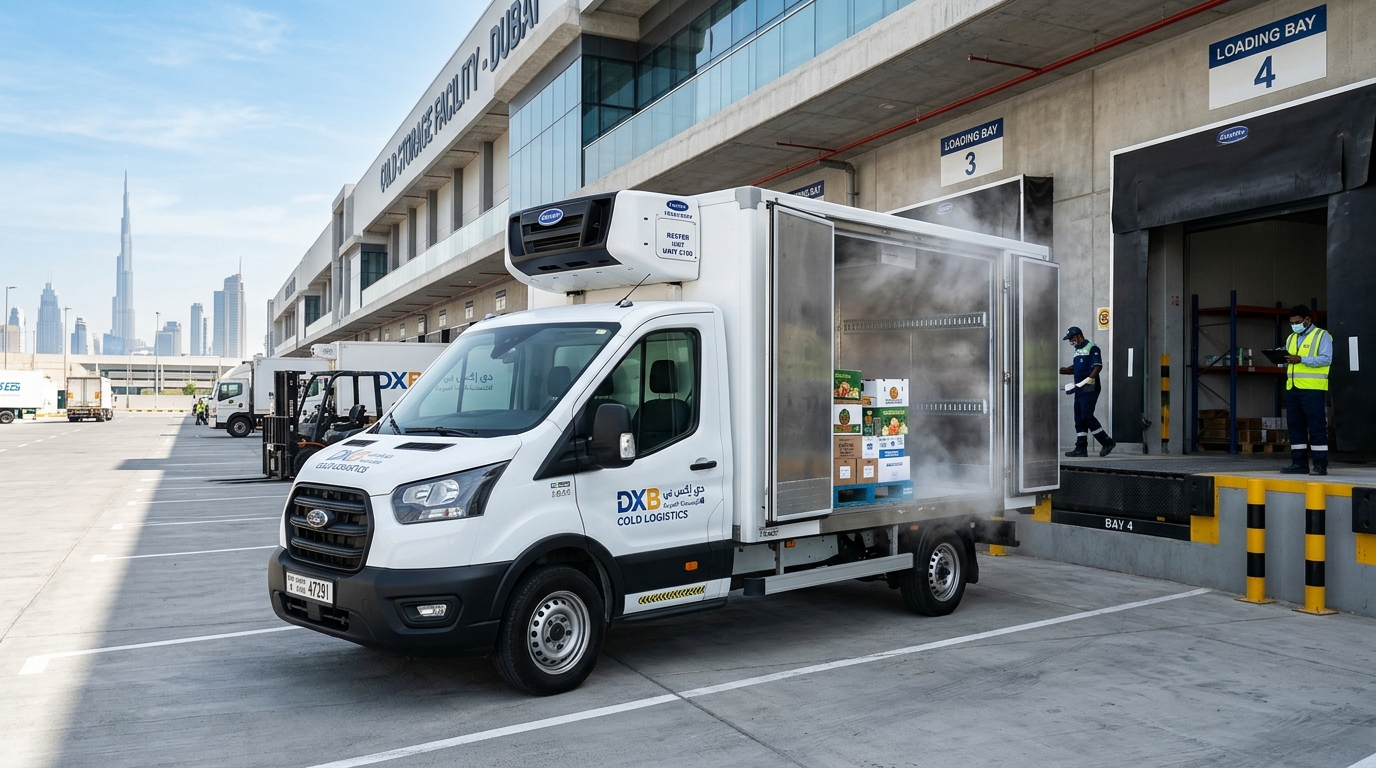
When surface asphalt hits 62°C in the UAE summer, an unmonitored auxiliary compressor belt slip can spoil an entire refrigerated cargo load in under 20 minutes. Modern food distribution demands live temperature telemetry paired with proactive service dispatch.
Dubai Municipality's Food Safety Department enforces strict cold-chain integrity standards across all food distribution fleets. From dairy and meat haulers to bakery logistics, perishable transports are required to maintain continuous thermal records throughout their transport route.
Dual-probe temperature logging with CANbus condenser pressure monitoring detects thermal drift 45 minutes before cargo threshold breaches occur, preventing total batch rejection.
1. Dual-Sensor Telematics vs. In-Cab Display Blindspots
Traditional refrigeration units display cabin temperatures based on a single sensor mounted near the evaporator coil. In real-world multi-drop routes, opening rear delivery doors introduces extreme thermal shock, raising door-zone temperatures well into spoilage thresholds while the evaporator sensor continues reading nominal values.
FleetFix integrates multi-point wireless probes across both cargo front and rear bulkheads, streaming real-time thermal curves into FleetFix Sync with automated dispatch triggers if temperatures exceed specified limits for more than 4 minutes.
2. Preventive Compressor & Alternator Servicing
Commercial chiller units place heavy electrical and mechanical loads on vehicle engines. Secondary heavy-duty alternators and compressor belt tensioners experience rapid wear under Gulf heat. Through FleetFix Flow, reefer fleets undergo standardized 30-day thermal and electrical testing at vetted partner garages across 5 Emirates, guaranteeing zero unmonitored road failures.